
Understanding the World's Reserve Currency
Discover what the world's reserve currency is and how it influences global economics, including the cost of everyday items like your morning coffee. Learn about the impacts of reserve currencies on inflation and purchasing power.
FINANCIAL
Jeff, founder of My Mate Jeff, has over 40 years of experience in building businesses, investing, and mentoring. His articles blend research and personal experience to clarify complex topics like finance, health, relationships, and personal development, enabling readers to make confident decisions. Every article is written with one goal: to help readers understand important life topics, from finance and health to relationships and personal development, so that they can make better decisions with confidence
10/26/20253 min read
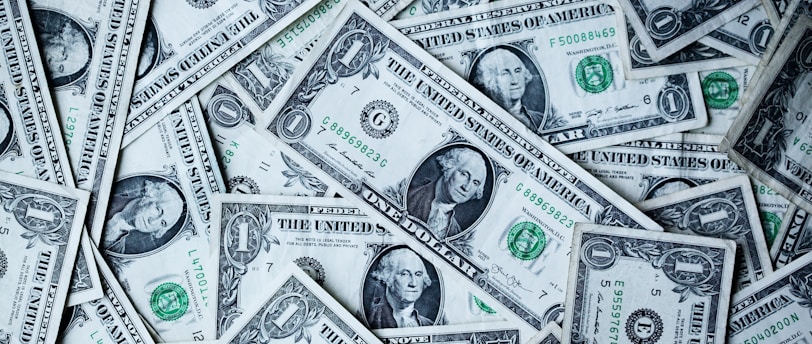

What Is the World Reserve Currency — and Why Does It Matter?
When you hear people talk about the U.S. dollar being the world's reserve currency, they're describing one of the most powerful positions a country can hold in the global economy. But what exactly does that mean — and why is it so important?
Let's break it down.
What Is a World Reserve Currency?
A world reserve currency is the currency that governments, central banks, and international institutions hold in large quantities to use for global trade, investments, and financial stability.
In simpler terms, it's the currency most of the world trusts.
Countries use reserve currencies to:
Settle international transactions (for example, oil is typically traded in U.S. dollars).
Back their own currencies to maintain stability.
Repay international debts.
Store value in case of an economic emergency.
Because global trade and finance need a "common language," a dominant reserve currency makes international business smoother and more predictable.
The Power and Privilege of Having the Reserve Currency
When a country's currency becomes the world's reserve, it gains enormous advantages:
Lower borrowing costs — Global demand for that currency keeps interest rates low.
Strong global influence — The issuing country can exert significant power over global finance and trade.
Economic resilience — During crises, investors often rush to buy the reserve currency, strengthening its value.
"Exorbitant privilege" — This term, famously coined by France's Valéry Giscard d'Estaing, refers to how the U.S. can run larger deficits because other countries are willing to hold dollars as reserves.
In short, being the issuer of the world's reserve currency allows a nation to borrow cheaply, spend freely, and influence the global economy.
A Brief History of Reserve Currencies
The U.S. dollar wasn't always the world's go-to currency. Over the past several centuries, several other nations have held that role:
Portuguese Escudo (15th–16th centuries) — Portugal dominated global trade routes early in the Age of Exploration.
Spanish Real (16th–17th centuries) — As Spain's empire grew across the Americas, its silver coin became a global medium of exchange.
Dutch Guilder (17th–18th centuries) — The Netherlands' financial innovation and trade networks made Amsterdam the world's banking hub.
British Pound Sterling (19th–early 20th centuries) — The British Empire's vast reach and London's financial dominance made the pound the world's primary reserve currency for over a century.
U.S. Dollar (Mid-20th century–Present) — After World War II, the Bretton Woods Agreement (1944) cemented the dollar's status, as it was backed by gold and the strength of the American economy. Until August 15, 1971, President Richard Nixon announced the suspension of the dollar's convertibility into gold, effectively ending the Bretton Woods system. This event is known as the Nixon Shock. In 1973, the system of fixed exchange rates collapsed, and the U.S. dollar became a fiat currency — backed only by the government's declaration and the strength of the U.S. economy, not by gold.
Today, the U.S. dollar accounts for roughly 60% of global foreign exchange reserves, far outpacing the euro, yen, and yuan.
Could Another Currency Replace the U.S. Dollar?
Some economists speculate that the euro, Chinese yuan, or even digital currencies could challenge the dollar's dominance in the future. However, for a currency to replace the dollar, it would need to be:
Stable and widely trusted
Easily traded globally
Supported by deep and open financial markets
Issued by a strong and transparent government
So far, no other currency fully meets all those criteria.
See my blog 'Is the US Economy Going To Crash?'
Why the World Reserve Currency Still Matters
The world's reserve currency underpins global economic stability. It affects everything from import prices to international lending and foreign investment. When the reserve currency fluctuates, it can ripple across the globe, influencing interest rates, trade balances, and even the price of your morning coffee.
In essence, the world reserve currency isn't just a symbol of power — it's the beating heart of the global financial system.
In summary:
The world's reserve currency is what keeps the global economy running smoothly. It grants its issuing country unique advantages and reflects trust in that nation's economic strength. From the British pound to the U.S. dollar, history shows that reserve currencies rise and fall with the power of the nations behind them. The story of the next one is still being written.
Experience: 40+ years in business, investing, and personal development.
For more blogs, visit the following category pages:
❓ Frequently Asked Questions
© 2025. All rights reserved.