
Boost Retention: The Power of Writing by Hand
Discover how writing by hand can significantly increase your retention of information. Explore the cognitive benefits of writing and improve your learning experience today.
PERSONAL DEVELOPMENT
Jeff, founder of My Mate Jeff, has over 40 years of experience in building businesses, investing, and mentoring. His articles blend research and personal experience to clarify complex topics like finance, health, relationships, and personal development, enabling readers to make confident decisions. Every article is written with one goal: to help readers understand important life topics, from finance and health to relationships and personal development, so that they can make better decisions with confidence
11/3/20254 min read

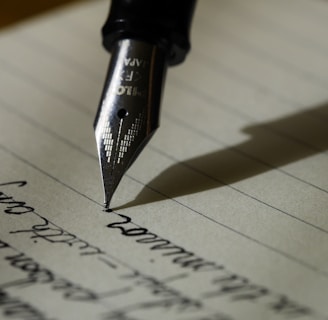
The Power of Writing by Hand: How Pen and Paper Can Make You Smarter
In a world filled with smartphones, tablets, voice notes, and keyboards, the humble pencil and notebook may seem outdated. Many people now type everything from shopping lists to brainstorming sessions without ever using a pen. However, there is something extraordinary, almost magical, that occurs in the brain when you write by hand.
Handwriting doesn't just document your thoughts.
It rewires your brain.
Why Writing by Hand Makes You Smarter
Writing activates more of your brain than typing.
Typing involves a repetitive motion, as each letter feels similar under your fingers.
Writing by hand, however:
Engages fine motor skills
Activates memory centres
Stimulates language processing and creativity
Every letter you write represents a small step in solving a problem.
Your brain creates new neural pathways whenever your pen touches the page. Writing by hand challenges the brain and enhances learning.
You remember more of what you write.
Research shows that individuals who take notes by hand retain more information, think more deeply, and understand concepts more thoroughly than those who type the same information.
Why?
Because writing forces you to:
Slow down
Interpret information
Decide what actually matters
Typing allows for mindless transcription. Writing requires active engagement.
It improves creativity and problem-solving
Writing by hand connects thought and movement. The slower pace gives your brain more time to form ideas and see relationships.
Writing is how:
Authors often outline stories by hand
Entrepreneurs sketch concepts on paper
Journalers gain clarity by physically writing their thoughts
Pen plus paper results in unfiltered creativity.
Writing by Hand Isn't Just Mental, It's Emotional
Writing slows down the chaos of the mind. When you write your worries or plans on paper, you:
Reduce stress
Break emotional loops
See things more objectively
Many therapists recommend journaling for emotional regulation, as writing helps you process your feelings. Typing is quick, while writing is deliberate.
It Strengthens Self-Discipline and Focus
Notifications don't pop up on paper.
Writing by hand:
Removes digital distractions
Improves concentration
Builds patience and persistence
In a distracted world, handwriting teaches you to be present.
Handwriting Literally Changes Your Brain Structure
When you write, your brain creates a sensorimotor memory.
That means your brain remembers:
The movement of your hand
The shape of the letter
The thought behind the word
Writing strengthens neural pathways associated with:
Intelligence
Learning
Memory recall
Emotional regulation
Writing by hand rewires the brain toward deeper thinking.
How to Incorporate Handwriting Into Daily Life
You don't have to write a novel.
Start small:
Activity: Why It Helps. Daily journaling clears mental clutter and boosts emotional awareness.
Handwritten to-do list increases commitment and follow-through
Goal setting on paper builds self-belief and clarity.
Mind maps/sketching ideas enhance creativity and problem-solving
Writing summaries of what you learn strengthens memory and understanding.
Try this challenge:
Spend 5 minutes every morning writing by hand.
You'll feel the difference.
Brain-Based Learning - Sensory Memory
Sensory memory is the brain's first, lightning-fast stage of storing information, acting as a temporary filter that captures everything we see, hear, touch, taste, and smell for just a fraction of a second before deciding what to pass on. Incredibly short-lived visual impressions last less than half a second, and sounds just a few seconds. Still, without them, the world would feel chaotic and impossible to navigate.
Sensory memory gives the brain a brief moment to stabilise incoming information so it can be recognised, processed, and, if necessary, transferred to short-term or working memory. Writing plays a surprisingly influential role in strengthening this process by forcing the brain to slow down, pay attention, and intentionally convert fleeting sensory impressions into structured thoughts.
When you write, you engage multiple senses at once: you see the words forming, you hear the internal voice shaping ideas, you feel the movement of your hand, and you often read your own writing back to yourself. This multisensory involvement reinforces learning by creating more neural pathways for the same piece of information, making it easier to store and recall later.
Writing also demands focused attention, which acts like a gatekeeper, allowing only the most relevant and meaningful details to move from sensory memory into short-term memory, and eventually into long-term memory.
When we listen or read passively, much of what we encounter stays in sensory memory for too brief a time to take hold; but when we take notes, summarise, or physically write our thoughts, the act of choosing the right words helps the brain decide, "This matters—keep it."
In this way, writing transforms raw sensory input into a more profound understanding. It strengthens working memory by helping us organise chaotic streams of thought into a logical sequence. It also improves long-term retention because the physical act of writing simultaneously activates the motor cortex, language centers, visual system, and hippocampus, making the memory more robust.
Even writing by hand further enhances this process, as the slower, more deliberate motion creates stronger sensory patterns than typing. Over time, this repeated practice of turning sensory impressions into written ideas trains the brain to think more clearly, focus more effectively, and remember more accurately.
In short, sensory memory may be fleeting. Still, writing captures what matters and anchors it firmly in the mind, making it one of the most powerful learning tools we possess.
Final Thoughts
Handwriting is not about nostalgia
It's about neurological power.
Typing records information.
If you want to think better, learn faster, and connect more deeply with your ideas, pick up a pen. When you write by hand, you are not just putting words on paper. You are building a more intelligent brain.
As they say, "The Pen is mightier than the sword", and in reality, the keyboard too.
Experience: 40+ years in business, investing, and personal development.
See blog Sensorimotor Memory: The Hidden System That Shapes Your Brain and Learning
For more blogs, visit the following category pages:
❓ Frequently Asked Questions
© 2025. All rights reserved.