
The Value of Precious Stones and Diamonds
Discover the factors that make precious stones valuable, the reasons behind investing in diamonds, and the complex history of the diamond industry, including De Beers' monopoly and the issues surrounding conflict diamonds.
FINANCIAL
Jeff, founder of My Mate Jeff, has over 40 years of experience in building businesses, investing, and mentoring. His articles blend research and personal experience to clarify complex topics like finance, health, relationships, and personal development, enabling readers to make confident decisions. Every article is written with one goal: to help readers understand important life topics, from finance and health to relationships and personal development, so that they can make better decisions with confidence
10/27/20253 min read
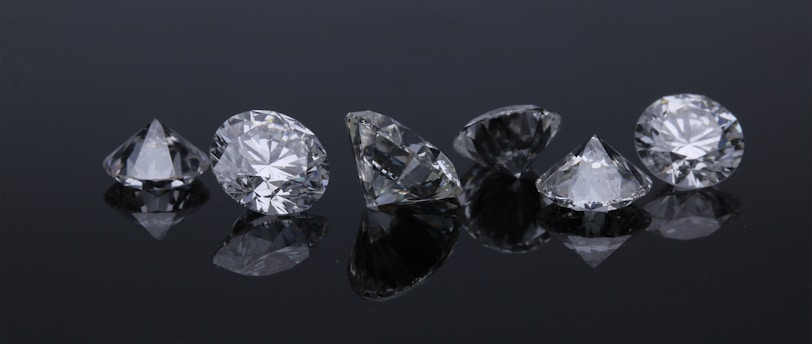

What Are Precious Stones?
Precious stones — or gemstones — are rare minerals valued for their beauty, durability, and rarity. When cut and polished, they become the sparkling jewels used in fine jewellery, art, and even as investment assets.
Traditionally, the four classic precious stones are:
Diamond – prized for brilliance and hardness.
Ruby – known for its deep red colour and rarity.
Sapphire – found in shades of blue, pink, and yellow.
Emerald – celebrated for its vivid green hues.
All other gemstones — such as amethyst, garnet, opal, and aquamarine — are classed as semi-precious. However, that distinction is historical rather than scientific; some semi-precious stones are now rarer and more valuable than the traditional four.
Why People Invest in Precious Stones
For centuries, people have viewed gemstones not only as adornments but also as a store of value. Their combination of beauty and scarcity makes them attractive to collectors and investors alike.
Key reasons people invest include:
Tangible value – Unlike shares or digital assets, gemstones are physical, portable, and durable.
Rarity – The supply of high-quality stones is limited, and some mines are nearly exhausted.
Hedge against inflation – Like gold, gemstones often hold their value during economic uncertainty.
Global demand – A long-standing cultural and emotional demand for fine jewellery supports its long-term value.
Privacy – Gems can be held discreetly and transferred easily, appealing to those seeking confidential or portable wealth.
However, gemstone investment also carries risks — such as price volatility, lack of liquidity, and the difficulty of verifying authenticity or quality without expert help.
The Diamond Industry and De Beers' Monopoly
When people think of gemstones, they usually picture diamonds — a dominance created mainly by one company: De Beers.
Founded in the late 1800s in South Africa by Cecil Rhodes, De Beers grew to control around 90% of the global diamond trade for most of the 20th century. Through careful supply control and powerful marketing, De Beers transformed diamonds from a luxury for the elite into the symbol of love and commitment we know today.
Their most famous marketing slogan — "A diamond is forever" — launched in 1947, cemented the idea that a diamond engagement ring was essential to romance. Later popularised in song as "Diamonds Are a Girl's Best Friend", the phrase embedded the idea of diamonds deeply into Western culture.
In truth, this wasn't a natural cultural evolution — it was one of the most successful advertising campaigns in history, turning a controlled supply and clever marketing into a perception of eternal value.
The Dark Side: Conflict Diamonds
Unfortunately, the beauty of diamonds has a darker side.
In several African nations, diamonds have been used to fund armed conflicts — particularly during the 1990s in countries such as Sierra Leone, Angola, and the Democratic Republic of Congo. These are known as "conflict diamonds" or "blood diamonds."
They were mined in war zones and sold to finance insurgencies and human rights abuses. The global outrage that followed led to the creation of the Kimberley Process in 2003 — an international certification scheme designed to prevent the trade in conflict diamonds.
While the process has helped reduce the problem, loopholes and enforcement challenges remain. Ethical consumers now increasingly seek traceable or lab-grown diamonds, ensuring their purchases do not contribute to exploitation or violence.
Investing Responsibly
For those interested in gemstone investment, due diligence is essential. Consider:
Source and certification – Always ask for documentation from recognised authorities (e.g., GIA, HRD, or IGI).
Ethical sourcing – Choose conflict-free or lab-grown stones where possible.
Expert valuation – Work with a qualified gemologist or appraiser before buying.
Long-term perspective – Gemstones are best viewed as a store of value over time, not a quick profit.
Lab-grown diamonds, in particular, have become a modern alternative — chemically identical to natural diamonds but created without environmental damage or ethical concerns, often at a fraction of the price.
More Than Just Sparkle
Precious stones will likely always captivate us. They blend science, history, culture, and emotion into something that feels timeless. But as investors and consumers, we must look beyond the shine — understanding where these stones come from, how they're marketed, and the human stories behind them.
Buyer BeWare
In my twenties, with a pocketful of money and an ego the size of New York, I purchased thousands of dollars' worth of diamonds from a dealer in Israel on one of my many tours of the Middle East. Only to find when I consulted an expert in the UK that they were worthless. The expert's words sank my heart and destroyed my ego," You bought these in Israel"!
A costly lesson that I have never forgotten. Now I never buy without knowledge.
A fool and his money are easily parted!
Experience: 40+ years in business, investing and personal development.
For more blogs, visit the following category pages:
❓ Frequently Asked Questions
© 2025. All rights reserved.