
Cash or Debit, Credit Cards
Learn about the benefits of cash and how it can be used with debit and credit cards.
FINANCIAL
Jeff, founder of My Mate Jeff, has over 40 years of experience in building businesses, investing, and mentoring. His articles blend research and personal experience to clarify complex topics like finance, health, relationships, and personal development, enabling readers to make confident decisions. Every article is written with one goal: to help readers understand important life topics, from finance and health to relationships and personal development, so that they can make better decisions with confidence
1/4/20265 min read

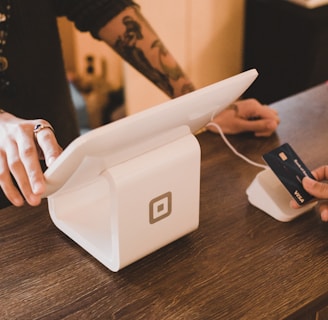
Use Cash Instead of Cards: Because Spending Should Hurt (At Least a Little)
In today’s modern age, spending money has never been easier. With a simple tap of a debit or credit card, or a glance at a phone screen, goods and services appear almost instantly: groceries, clothes, entertainment, subscriptions, food delivery, digital products: all available within seconds.
Convenience has become the defining feature of modern commerce. But convenience comes at a cost, and that cost is often invisible until it’s too late.
Using cash hurts, and that pain might be precisely what we need.
When you pay with cash, you physically see your money leave your hands. The notes get thinner. The coins disappear. Your wallet becomes lighter. There is a tangible, emotional response to spending. When you pay with a card, that sensation is gone. Money becomes abstract numbers on a screen, balances updated silently, debt accumulating invisibly.
This shift raises an important question: has technology made life easier, or has it subtly trained us to overspend, stay in debt, and surrender control?
Let’s discuss.
The Psychology of Spending: Why Cash Feels Different
Behavioural psychologists have long studied the “pain of paying.” This pain refers to the emotional discomfort people feel when parting with money. Cash intensifies this feeling because it is physical. You can see it. You can touch it. You think its absence immediately.
Cards, on the other hand, reduce that pain. Swiping, tapping, or clicking doesn’t trigger the same emotional response. There is no visible loss, only delayed consequences. This makes it easier to justify impulse purchases, upgrade to more expensive options, or buy things we don’t truly need.
That is not accidental. Retail environments are designed to reduce friction. Smooth checkout processes, saved card details, one-click purchases, and contactless payments all exist to make spending feel effortless. The easier it is to spend, the more likely you are to pay. When cash disappears from the equation, so does hesitation.
The Rise of Effortless Spending
Debit and credit cards were originally introduced for convenience and security. Carrying large amounts of cash can be risky, and cards make transactions safer and faster. However, over time, the system has evolved.
Credit limits increased. Buy-now-pay-later schemes exploded. Subscriptions replaced one-time purchases. Spending became detached from immediate consequences.
We now live in a world where people spend money they haven’t earned yet, on things they don’t really need, to impress people they may not even like. Debt is normalised.
Interest is hidden in fine print. Monthly payments disguise the actual cost of ownership. When money stops feeling real, spending becomes emotional rather than intentional.
Using Cash Forces Awareness
Cash demands mindfulness. You cannot accidentally overspend cash you don’t have. When your wallet is empty, the transaction ends. There is no overdraft, no delayed payment, no credit extension. Money creates a natural boundary.
This boundary forces questions:
Do I really need this?.
Is this worth giving up something else?.
How much do I have left?.
These questions are powerful. They restore agency. They slow you down. In a culture built on speed and instant gratification, slowing down is an act of resistance.
Is This a Deliberate Ploy to Keep Us Spending?
This is where the conversation becomes uncomfortable and interesting.
Is the move toward a cashless society simply the result of technological progress, or is it part of a larger system designed to encourage spending, track behaviour, and maintain economic dependence?
The truth likely lies somewhere in between.
On one hand, corporations benefit enormously from card-based spending. More spending means more profit. Financial institutions earn from transaction fees, interest, penalties, and consumer debt.
The system rewards behaviour that keeps money circulating—and flowing upward.
On the other hand, not every advancement is born from malicious intent. Technology evolves to solve problems. Cards reduce theft. Digital records simplify accounting. Online commerce requires digital payments.
Convenience is genuinely beneficial.
The concern is not that technology exists but that it is rarely neutral.
Tracking, Tracing, and the Illusion of Privacy
Every card transaction leaves a trail of where you shop, what you buy, and when you buy it. How often. How much. This data is collected, stored, analysed, and often sold. Spending patterns reveal habits, preferences, routines, and even vulnerabilities.
Cash, by contrast, is private. No algorithm knows what you bought with a twenty-dollar bill. No database tracks your purchases at a local store. Cash offers anonymity in a world obsessed with data.
The question becomes: what are we trading for convenience?
When everything is traceable, behaviour can be influenced. Adverts become more targeted, and prices can be adjusted dynamically. Access can be controlled. In extreme scenarios, spending itself can be restricted.
While these concerns may sound dramatic, history shows that systems of control often begin quietly, wrapped in convenience and efficiency.
The Comfort of Control or the Illusion of It
Many people believe cards give them more control because they can “track” their spending through apps and statements. But tracking after the fact is not the same as control in the moment.
Cash controls you before the purchase. Cards control you after.
With cash, the decision happens upfront. With cards, the consequences are delayed. This delay creates a psychological gap where overspending thrives. By the time you check your balance, the money is already gone.
However, cash is not perfect. It can be lost or stolen. It doesn’t earn interest. It’s not practical for all purchases. And in a primarily digital economy, using only cash can feel restrictive.
So the question isn’t whether cash or cards are “better,” but which one keeps you more aware.
Are We Really in Control of Cash?
This is the uncomfortable flip side. Even with cash, we are still part of an economic system we didn’t design. Inflation reduces purchasing power. Prices rise regardless of payment method.
Governments control currency supply. Corporations influence wages. Cash does not free us from the system—but it does change how we experience it.
Cash gives us local control, not absolute freedom. It restores a sense of responsibility and consequence at the individual level, even if the larger system remains unchanged. And sometimes, that slight shift is enough to change behaviour.
The Emotional Cost of Effortless Spending
When spending doesn’t hurt, saving doesn’t happen. When saving doesn’t happen, stress increases. Financial anxiety grows quietly, masked by temporary pleasure. Many people don’t realise they’re struggling until the bills arrive, the debt accumulates, or the account balance becomes impossible to ignore.
Cash introduces emotional friction. That friction can be uncomfortable, but it is honest. Pain is not always bad. Pain teaches limits. It encourages reflection. It creates boundaries. In a financial sense, pain can be protective.
Finding Balance in a Cashless World
Cash is not a call to reject technology or abandon cards entirely. Modern life requires flexibility. Online payments, travel, emergencies, and business transactions often depend on digital systems. But intentional use matters.
Using cash for discretionary spending, food, entertainment, and shopping can dramatically change habits, with cards used for essentials or planned expenses. This hybrid approach combines convenience with awareness.
The goal is not restriction. The goal is consciousness.
Final Thoughts: Who Really Benefits From Effortless Spending?
When spending becomes painless, someone benefits. Often, it’s not the consumer.
Cash reminds us that money represents time, effort, and energy. It reconnects spending with reality. It asks us to pause, to feel the loss, and to decide whether it’s worth it.
Is the push toward a cashless society a deliberate strategy to keep people spending, tracked, and in debt? Perhaps partially. Is it also the natural result of technological progress? Yes.
Both can be true.
What matters is not the system alone, but how we engage with it. Cash gives us a small but powerful tool: awareness. And in a world designed to distract, numb, and automate our decisions, awareness may be the most valuable currency of all.
Spending should hurt just enough to remind us that control begins with consciousness.
Experience: 40+ years in business, investing, and personal development.
See the blog How to manage your personal finances.
For more blogs, visit the following category pages:
❓ Frequently Asked Questions
© 2025. All rights reserved.